Some people prefer to prepare for public speaking entirely on their own. Others attend public speaking workshops or training programs and then apply what they have learned in practice, while still managing the preparation process themselves. Some choose to work with individual specialists: presentation designers, English language coaches, or other experts, receiving support in specific areas while continuing to plan, coordinate, and carry out the rest of the preparation independently.
There is, however, another approach: comprehensive speaker support. In this format, the coach is involved not in just one part of the preparation process but throughout the entire journey — from the initial idea to the final presentation.

Individual Speaker Support
A coach does more than provide advice during consultations. They help build a preparation strategy tailored to the speaker’s goals, strengths, growth areas, and the specific requirements of the event. They can take on part of the workload, recommend the most effective tools and approaches, and, when needed, bring in additional specialists to support the process.
The goal is not only to prepare a successful presentation, but also to save time and energy, strengthen the final result, and help the speaker develop useful skills while working toward a real-world objective.
This is the primary service offered by our studio.
Both individual clients and organizations work with us when preparing for conference talks, project presentations, keynote speeches, pitches, internal events, and other high-stakes communication opportunities.
We also have experience building long-term relationships with our clients:
Many speakers return when preparing for future presentations, gradually strengthening their communication skills and expanding their toolkit with each new project.
Organizations often establish ongoing speaker support programs for employees who regularly present their work. In this format, speaker coaching becomes both an educational benefit and a practical resource that helps employees solve real business challenges more effectively.

How Does a Public Speaking Coach Work?
It is entirely possible to prepare for a presentation on your own. Just as in sports, this can be an effective approach, especially for people who already have experience and a good understanding of the preparation process. However, even experienced athletes rarely prepare for important competitions alone. A coach helps them build a training strategy, identify weaknesses before they become problems, avoid unnecessary work, and focus on the activities that will have the greatest impact on performance.
Sometimes a coach helps find a shorter path to a goal. Other times, they encourage an athlete to invest more time in a particular skill because the long-term benefits will outweigh the effort. And sometimes, a coach simply takes care of part of the planning and decision-making process, allowing the athlete to focus on training.
Individual speaker support works in much the same way. You remain the author of your presentation and the expert on your subject. Our role is to guide the preparation process, help you make informed decisions, suggest effective tools and approaches, and provide support whenever it is needed. The goal is to make preparation more predictable, more structured, and less stressful, so that you can focus your energy on what matters most.
Every project follows its own path. Some speakers come to us with nothing more than an idea for a future presentation. Others arrive with a detailed outline or a complete slide deck. Some begin preparing months in advance, while others schedule their first session just days before stepping onto the stage.
While every engagement is different, most preparation processes tend to move through three core stages.
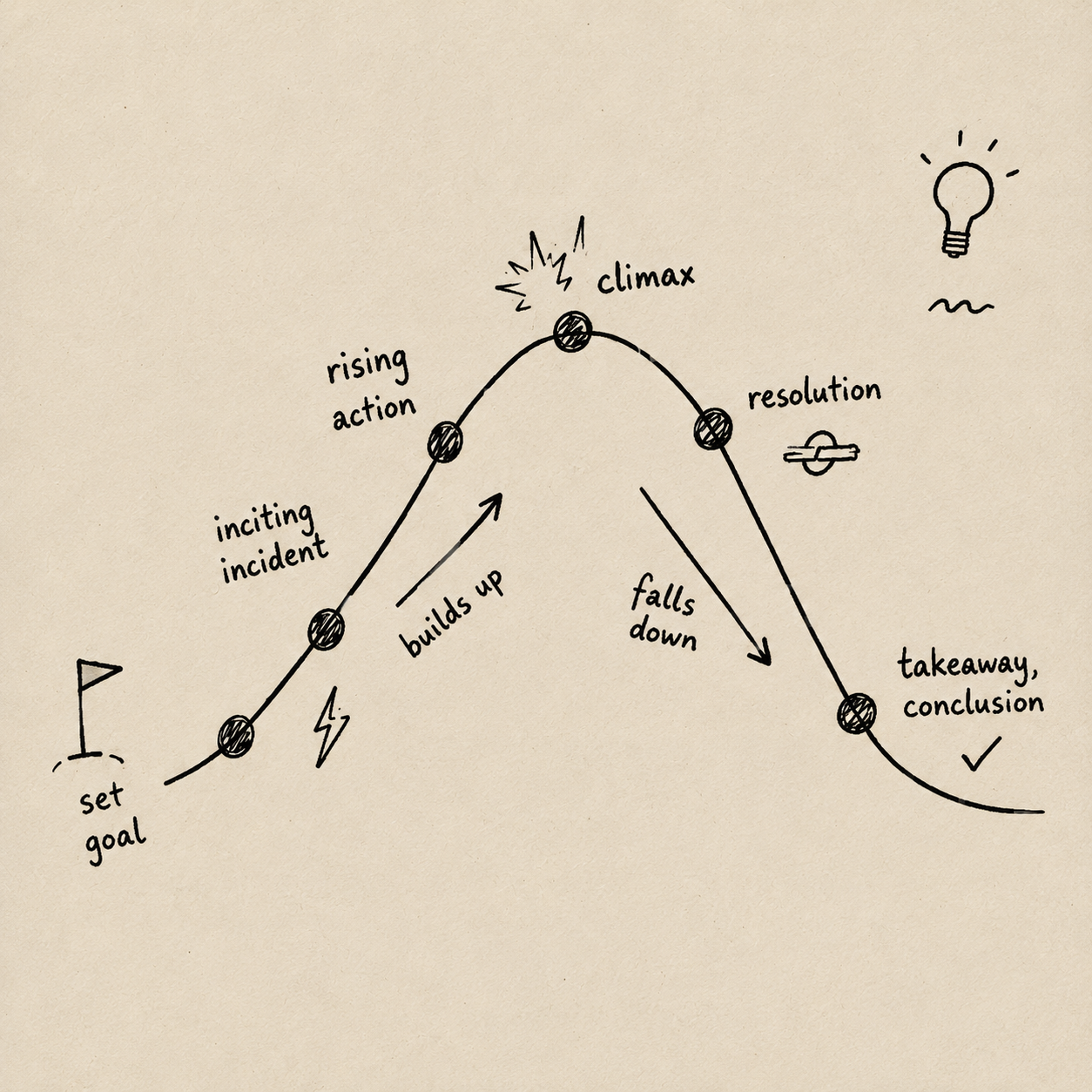
Stage 1. Concept, Structure, and Spoken Delivery
At this stage, we explore the context of the event: what you want to achieve, who will be in the audience, and what kind of communication style is most appropriate for that particular setting. These conversations help shape the core concept of the presentation, whether it takes the form of a central metaphor, a narrative, a case study, or a sequence of key ideas. Together, we choose an approach that fits both the speaker and the occasion, transforming a collection of thoughts into a clear and purposeful structure.
Once the structure is in place, the speaker begins developing the presentation itself, not as a script to memorize word for word, but as a natural spoken narrative that can be delivered confidently and authentically. At this stage, we also try to avoid two common extremes: writing a complete script and attempting to memorize it, or doing no preparation at all and hoping to improvise successfully on stage.
Some speakers need only a single session to build a strong structure and continue independently. Others benefit from several rounds of discussion, refinement, and feedback. In most cases, this stage takes between one and three consultations.
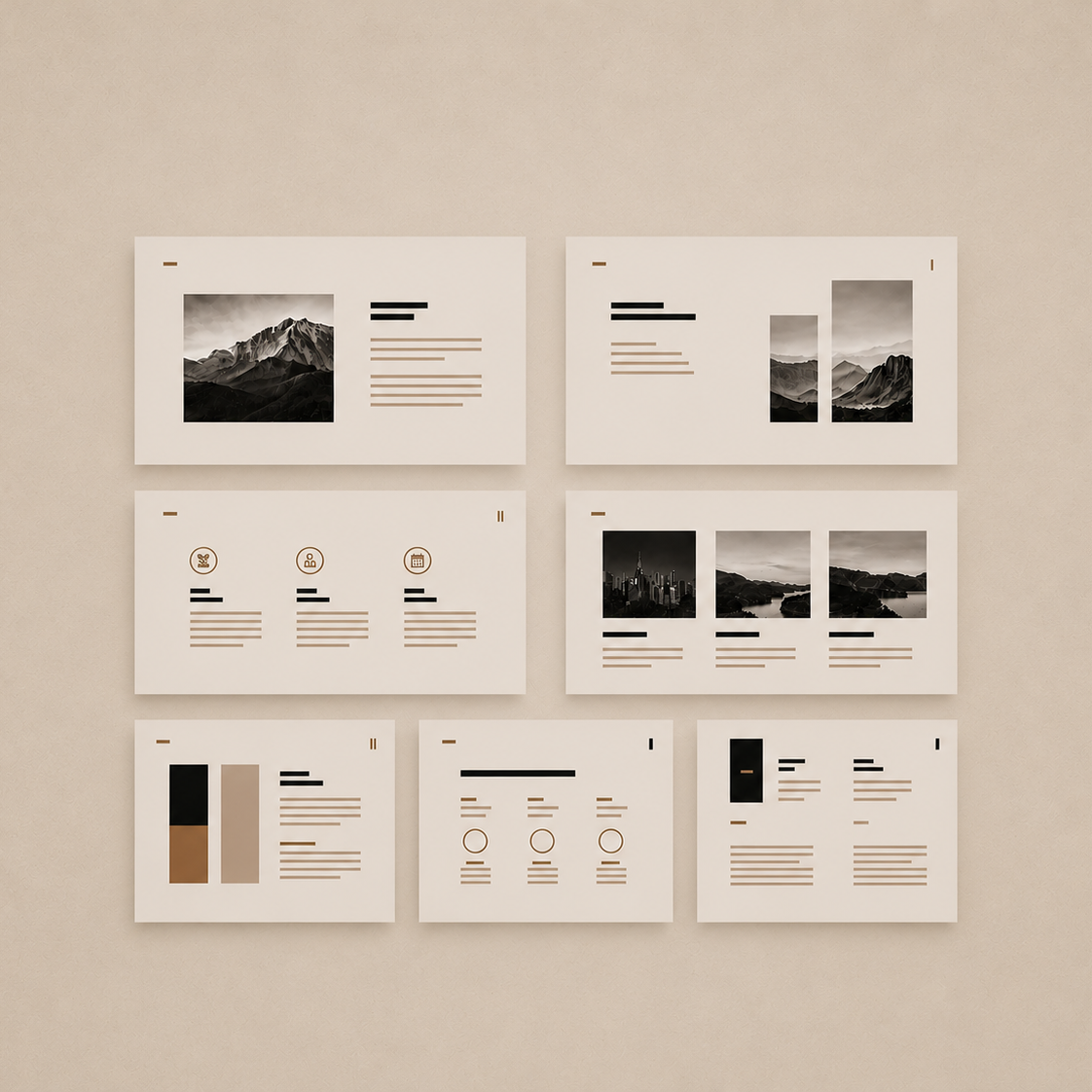
Stage 2. Slides and Visual Support
Once the presentation begins to take shape, we move on to the visual side of the project.
The first step is not design, but content. Together, we decide what should actually appear on the screen. When is a diagram more useful than a photograph? When does a chart help clarify an idea? When is it better to show nothing at all and allow the audience to focus entirely on the speaker? At this stage, every visual element is evaluated based on its contribution to the presentation rather than its appearance.
Only after the content strategy is in place do we move on to design and visual refinement.
Some speakers work with their own presentation designers or with design teams inside their organizations. In other cases, I provide design guidance directly. Sometimes the fastest way to explain an idea is to demonstrate it, so I may create working examples of several slides to illustrate an approach and help the speaker continue the work independently.
If a presentation requires full design support, this can be arranged as a separate service. In some projects, we have also developed presentation templates and foundational visual systems for teams that did not yet have an established presentation style.

Stage 3. Delivery and Audience Engagement
Once the structure and slides are in place, we can focus on the presentation itself.
For many speakers, the most important challenge is managing nerves. This is especially common when presenting infrequently or when the stakes are particularly high. In these cases, we work on preparing for the moment of stepping onto the stage, managing stress, maintaining focus, and using practical techniques that help speakers feel more comfortable and confident during the presentation.
For others, the next level of development lies in delivery and stage presence. Here, we may work on vocal variety, emphasis and pacing, gestures, movement, audience interaction, attention management, and other details that can make a presentation more engaging, dynamic, and persuasive.
This stage tends to be the most individual. Some speakers focus primarily on confidence and stress management, while others are more interested in refining their delivery skills. Many choose to work on both. Depending on the speaker's goals, experience, and timeline, this stage may involve anywhere from one to several sessions.
You Don’t Have to Follow the Entire Process
Every speaker starts from a different place and has different goals. Some come to us with nothing more than an idea and move through the entire process, from concept development to the final rehearsal. Others arrive with a completed presentation and simply want to refine the structure, prepare for challenging questions, or receive feedback on a rehearsal. Some seek support only with slides, delivery, or preparation for a specific event.
For that reason, we do not follow a one-size-fits-all process. During the first session, we assess your starting point, timeline, and objectives, and then build a preparation plan tailored to your specific situation.
Whether you are preparing for a conference talk, an internal presentation, a project defense, a pitch, a lecture, or any other public speaking engagement, you can begin with an introductory session. During our first meeting, we will discuss your goals, identify priorities, and create a realistic preparation plan that fits your needs and schedule.
Book a consultation